top of page

What Is Selective Encryption?


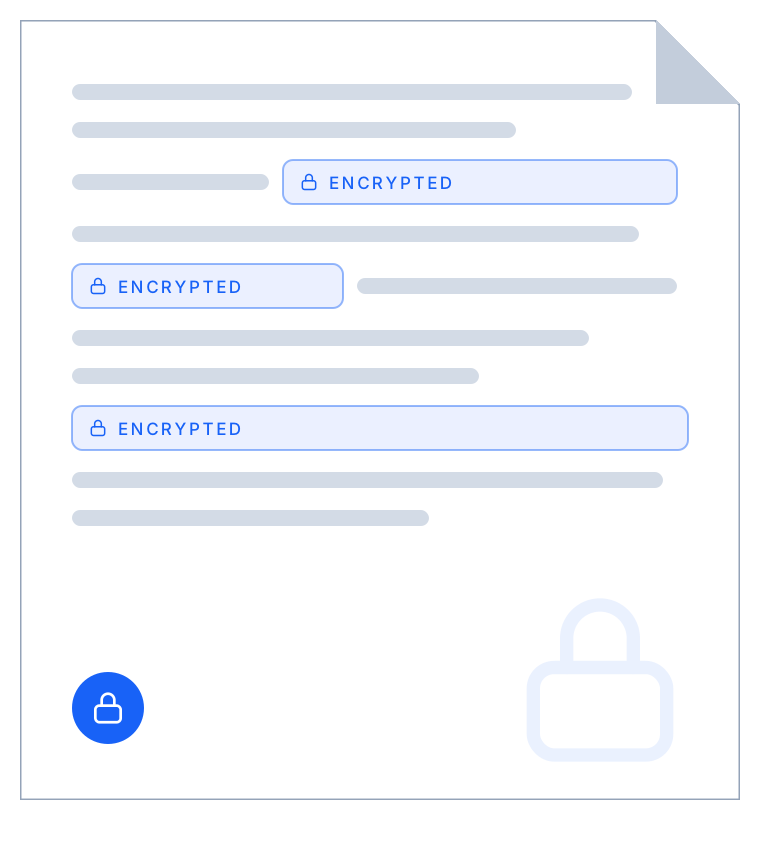
Definition:  Selective encryption is a data protection method that encrypts only the sensitive elements within a file or dataset while leaving the non-sensitive content usable, searchable, and compatible with collaboration and AI workflows.
Unlike full-file encryption, selective encryption preserves context and functionality while enforcing protection at the
object or field level.

Why Selective Encryption Exists

Traditional encryption was designed for storage and transport, not for modern data usage.

Today's data

Is shared across teams, tools, and third parties

Moves through collaboration platforms, SaaS apps, and AI systems

Must remain usable, searchable, and analyzable.

Full-file encryption forces an all-or-nothing tradeoff: protect the data or use it.

Selective encryption exists to eliminate that tradeoff.

What Selective Encryption Solves

Selective encryption enables organizations to:

Protect sensitive data without breaking collaboration

Enforce access controls that persist when files are shared externally

Prevent sensitive data from entering AI training, RAG, or embeddings

Maintain usability for non-sensitive content

Apply Zero Trust principles directly at the data layer

Protection becomes granular, portable, and enforceable. Not restrictive.

What Most Organizations Get Wrong About Encryption

Many security strategies fail because they assume encryption must apply to entire files or systems.

Common misconceptions include:

Encrypting the whole file is safer
This often forces users to bypass controls to get work done.

Encryption is incompatible with AI
This is only true for coarse, full-file encryption.

IRM and permissions are enough
These controls break once data leaves the system.

When encryption eliminates usability, it eliminates adoption.

Full-file encryption: Breaks search, collaboration, and AI workflows

IRM/DRM: Relies on applications and identities, not data

Tokenization: Often removes context AI systems need

Access controls: Do not persist once data is copied or transformed

Selective Encryption
vs Common Alternatives

Selective encryption protects only what must be protected, where it matters.

How Confidencial Defines
Selective Encryption

Context-preserving protection

Compatibility with AI workflows and vectorization

Policy enforcement that travels with the data

Auditable access at a granular level

Confidencial defines selective encryption as cryptographically protecting sensitive data at the object or field level while preserving the surrounding context required for collaboration, analytics, and AI.

This is achieved through:

Protection is embedded into the data itself, not wrapped around it.

Why Selective Encryption Matters for AI

AI systems require context to function. Full-file encryption removes that context. Selective encryption preserves it.

​

With selective encryption:

Sensitive entities remain protected

Non-sensitive text remains usable

AI systems can operate without ingesting protected data

Organizations avoid irreversible exposure during training or inference

Where Selective Encryption Is Used in Practice

Selective encryption is applied wherever sensitive data must remain usable:​

Unstructured documents containing PII, PHI, or IP

Shared files with external partners

AI training datasets and RAG pipelines

Collaboration tools and document workflows

Data subject to regulatory or contractual controls

Engineered for control. Architected for precision.

Frequently Asked Questions

!
Widget Didn’t Load
Check your internet and refresh this page.
If that doesn’t work, contact us.

Ready to Squeeze the Value Out of Your Data?

Don’t just discover or control your data, protect it. Confidencial makes it easy to secure sensitive information without slowing down business innovation.

bottom of page